Lead Acid Vs Lithium Battery E-Scooter Uk
Direct answer: lithium usually wins where weight, usable energy density and regular riding matter, while lead-acid can still make sense for low-cost, short-distance machines that were designed around it. The switch is not automatic: voltage, charger chemistry, tray strength and wiring must be checked first.
The human problem: weight changes the ride
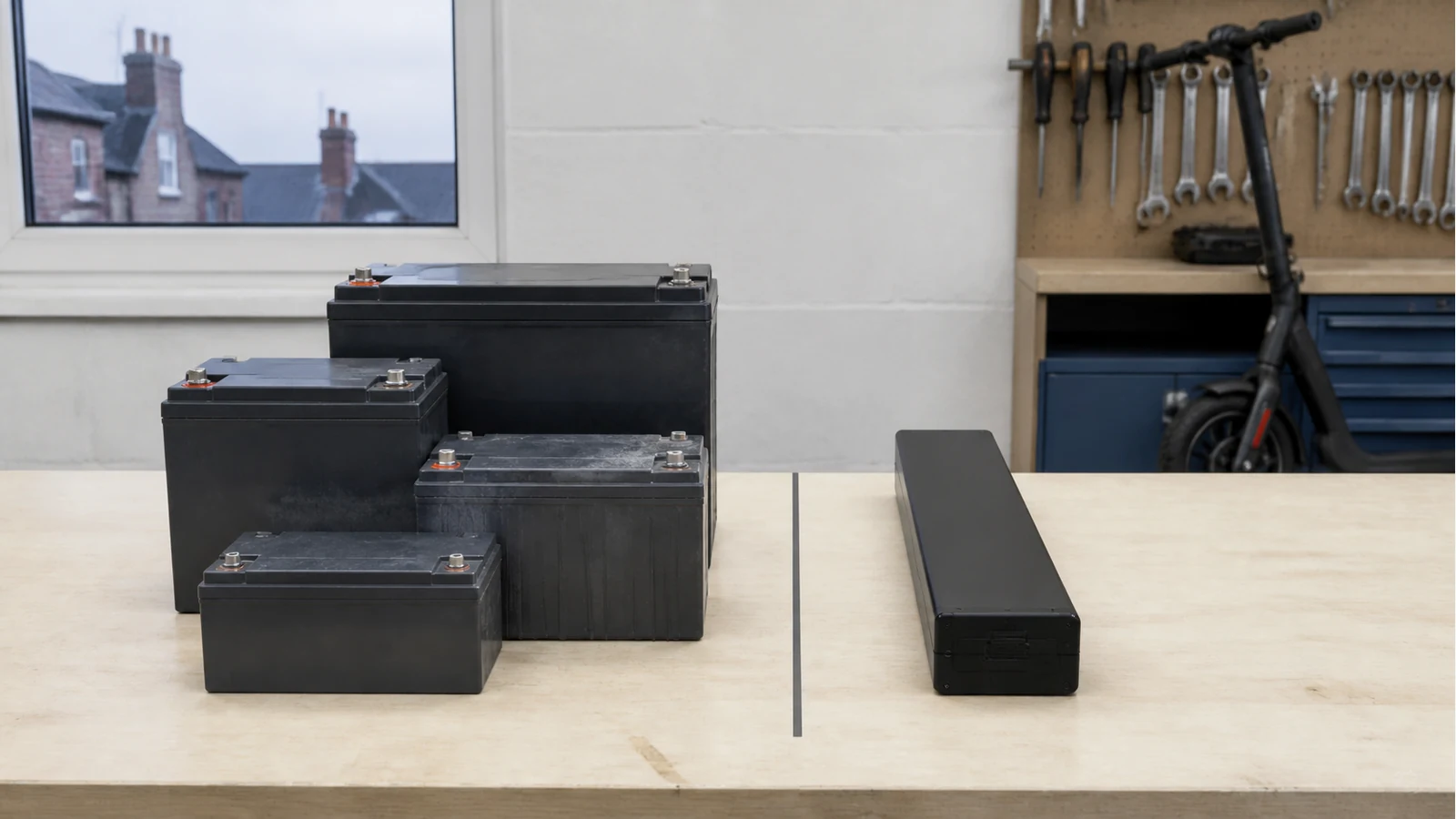
Lead-acid packs are bulky and heavy, especially where several blocks sit together. That mass can make a small scooter or moped feel slower to turn, harder to lift, and less pleasant in stop-start use. UK mobility battery guidance from Mobility World contrasts traditional lead-acid types with lithium options and notes different charging requirements in its UK battery type guide.
Comparison table
| Factor | Lead-acid | Lithium |
|---|---|---|
| Weight feel | Usually heavier for similar stored energy | Usually lighter and easier to package |
| Charger | Lead-acid charger profile | Lithium charger profile required |
| Upfront cost | Often lower | Often higher |
| Upgrade risk | Lower if replacing like-for-like | Higher if voltage, BMS, connector or tray is guessed |
| Best fit | Budget short hops and original systems | Riders prioritising weight and regular range |
What lithium changes and what it does not
GadgetCron's UK-facing battery chooser describes lithium-ion batteries as lighter and more efficient than older options in its e-scooter and e-bike battery guide. That is a useful direction of travel, not a permission slip to install any lithium pack. You still need the same nominal voltage, a compatible controller, a secure mount, and a charger made for the pack.
Where the switch becomes unsafe
GOV.UK warns that incompatible third-party batteries and chargers can create serious fire risk in its battery safety guidance for e-scooter users. That is the key line for a buyer: if the swap needs improvised wiring, an unknown charger, or a tray that squeezes the case, pause and get competent help.
Who should stay with lead-acid for now
Stay with like-for-like lead-acid, or ask a repairer, if the machine is closed-OEM, the controller label is unreadable, the battery bay is damaged, you cannot replace the charger, or the total project cost matters more than handling and convenience.
Next action
Before shopping, write down the old pack voltage, Ah rating, charger output label, connector shape and battery bay measurements. If any one of those is unknown, the job is still diagnosis, not buying.